Quick Answer
The best beginner fish are hardy, peaceful, and forgiving of minor water parameter fluctuations. Top picks: Betta (5+ gallons, solitary), Neon Tetra (10+ gallons, school of 6+), Platy (10+ gallons, livebearer), Corydoras Catfish (10+ gallons, school of 3+), and Zebra Danio (10+ gallons, active schooler). Always cycle your tank first and research each species' specific needs.
Choosing your first fish is exciting — and overwhelming. Pet stores display hundreds of species, but most aren't suitable for beginners. The wrong choice leads to dead fish, frustration, and an abandoned tank.
We've selected 10 beginner-friendly fish based on hardiness, peaceful temperament, adaptability to typical tap water, and availability. These species survive common beginner mistakes (slightly off parameters, occasional overfeeding) while teaching good fishkeeping habits.
What Makes a Fish "Beginner-Friendly"?
Beginner fish share these traits:
- Hardy: Tolerate pH 6.5-7.8, temperature 72-82°F, and minor ammonia/nitrite spikes
- Peaceful: Get along with other community fish
- Small: Fit in standard 10-20 gallon starter tanks
- Readily available: Sold at most pet stores, not specialty shops
- Affordable: $3-10 per fish, not $50+ for delicate species
- Forgiving: Survive occasional missed water changes or feeding errors
Remember: no fish is bulletproof. You still need to cycle your tank, perform weekly water changes, test water parameters, and feed appropriately. These species just give you a wider margin for error.
1. Betta (Betta splendens)
Betta Fish
Size: 2-3 inches · Lifespan: 3-5 years · Temperament: Semi-aggressive · Tank: 5+ gallons · Temperature: 75-80°F
$3-20
Shop Betta Supplies →The betta is America's most popular beginner fish — and for good reason. They're stunningly colorful, have distinct personalities, and can live in smaller tanks (though we recommend 5+ gallons, not the tiny cups they're sold in).
Bettas are labyrinth fish, meaning they breathe atmospheric air. This adaptation lets them survive in low-oxygen water that would kill other fish, making them exceptionally hardy. They're also slow swimmers, so they don't need powerful filtration.
Important notes: Male bettas fight each other (never keep two males together). Some bettas are aggressive toward fish with flowing fins (like guppies). Provide plenty of hiding spots and gentle filtration. Betta-specific pellets are better than generic flakes.
2. Neon Tetra (Paracheirodon innesi)
Neon Tetra
Size: 1.5 inches · Lifespan: 5-8 years · Temperament: Peaceful schooling · Tank: 10+ gallons · Temperature: 70-81°F
$2-4 each
Shop Tetra Supplies →Neon tetras are the classic community tank fish — small, peaceful, and mesmerizing in a school. Their electric blue and red stripes add vibrant color movement to any aquarium.
They're schooling fish, so buy at least six (ten is better). In smaller groups, they stress and hide. In proper schools, they swim confidently mid-water, creating a living light show. Neons are sensitive during acclimation — float the bag for 30 minutes, then drip acclimate if possible.
Neon tetra disease is a concern (look for curved spines, fading color). Buy from reputable stores, quarantine new fish if possible, and maintain excellent water quality to prevent outbreaks.
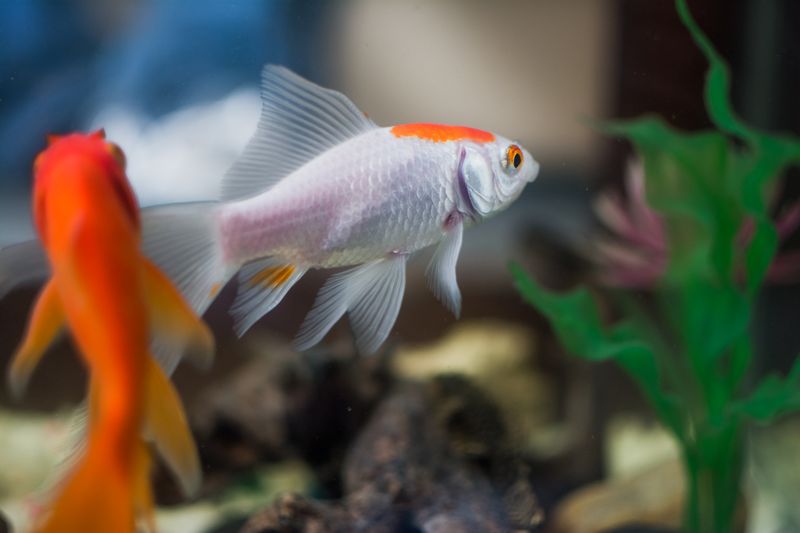
3. Platy (Xiphophorus maculatus)
Platy
Size: 2-3 inches · Lifespan: 3-5 years · Temperament: Peaceful · Tank: 10+ gallons · Temperature: 70-77°F
$3-5 each
Shop Platy Supplies →Platies are livebearers — they give birth to free-swimming fry instead of laying eggs. This makes them fascinating for beginners (you might get baby fish!) and extremely hardy. They adapt to almost any water conditions and eat anything from flakes to vegetables.
They come in dozens of color varieties: Mickey Mouse, sunset, wagtail, and more. Keep a ratio of 2-3 females per male to reduce female stress from constant mating attention. Platies breed readily — if you don't want babies, get only males or only females.
Platies are active swimmers that use all tank levels. They're peaceful with most community fish but may nibble on slow-moving betta fins.
4. Corydoras Catfish (Corydoras spp.)
Corydoras Catfish
Size: 2-3 inches · Lifespan: 5-10 years · Temperament: Peaceful schooling · Tank: 10+ gallons · Temperature: 72-78°F
$4-8 each
Shop Cory Supplies →Corydoras (or "cories") are the perfect bottom dwellers for beginner tanks. They scavenge uneaten food, keeping your substrate clean, and their whiskered faces and playful behavior are endlessly entertaining.
They're schooling fish — keep at least three, preferably six. Popular beginner species include: panda cory, bronze cory, and albino cory. They need sand or smooth gravel (sharp substrate damages their barbels).
Cories are sensitive to salt and medications containing copper. They also need sinking pellets or wafers — they can't survive on flakes that float at the surface. Watch them "wiggle" through the substrate — it's why they're called the "puppy dogs" of the aquarium world.
5. Zebra Danio (Danio rerio)
Zebra Danio
Size: 2 inches · Lifespan: 3-5 years · Temperament: Active schooling · Tank: 10+ gallons · Temperature: 64-75°F
$2-3 each
Shop Danio Supplies →Zebra danios are the hardiest fish on this list — they tolerate temperatures from 64°F to 75°F, pH from 6.5 to 8.0, and even moderate ammonia spikes. They're often used to cycle tanks (though we recommend fishless cycling).
These are active, zippy fish that swim constantly. They need horizontal swimming space (a 20-gallon long is better than a 10-gallon tall). Keep them in schools of six or more — alone or in pairs, they stress and hide.
Danios jump — a tight-fitting lid is mandatory. They're excellent dither fish (their activity makes shy fish feel secure). Their black and white stripes add graphic contrast to planted tanks.
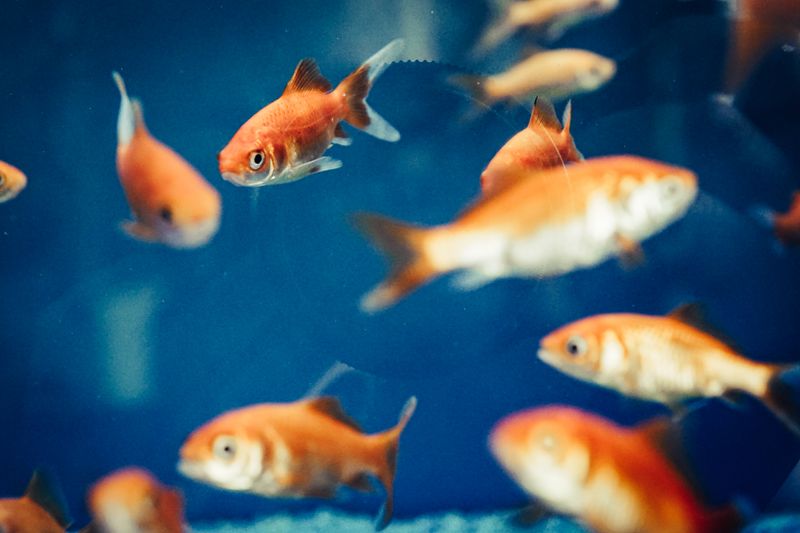
6. White Cloud Mountain Minnow (Tanichthys albonubes)
White Cloud Mountain Minnow
Size: 1.5 inches · Lifespan: 5-7 years · Temperament: Peaceful schooling · Tank: 10+ gallons · Temperature: 60-72°F
$2-4 each
Shop Minnow Supplies →White Clouds are cold-water fish — they don't need a heater if your room stays above 60°F. This makes them perfect for offices, dorm rooms, or anyone wanting to save electricity.
Their red-tipped fins and silver bodies shimmer under LED lights. They school tightly and breed readily in planted tanks. White Clouds are incredibly peaceful — they won't bother even the smallest tank mates.
They're sometimes sold as "poor man's neon tetras" but deserve recognition on their own merits. They're harder to find than neons but worth seeking out.
7. Harlequin Rasbora (Trigonostigma heteromorpha)
Harlequin Rasbora
Size: 2 inches · Lifespan: 5-8 years · Temperament: Peaceful schooling · Tank: 10+ gallons · Temperature: 72-80°F
$3-5 each
Shop Rasbora Supplies →Harlequin rasboras are slightly more sensitive than other fish on this list but still beginner-friendly if your tank is cycled and stable. Their copper-orange bodies with black triangular patches create stunning contrast against green plants.
They're shy initially but become bold in schools of eight or more. Harlequins prefer slightly acidic water (pH 6.0-7.0) and appreciate tannins from driftwood or Indian almond leaves. They're perfect for planted "blackwater" style tanks.
Harlequins are peaceful community fish that occupy the middle and top water levels. They pair beautifully with corydoras (bottom) and bettas (top/middle).
8. Guppy (Poecilia reticulata)
Guppy
Size: 1-2.5 inches · Lifespan: 2-3 years · Temperament: Peaceful · Tank: 10+ gallons · Temperature: 72-82°F
$3-10 each
Shop Guppy Supplies →Guppies are the rabbits of the fish world — they breed constantly. Males are colorful with flowing tails; females are larger and plainer. They're incredibly hardy and adapt to various water conditions.
Keep a ratio of 2-3 females per male to prevent female stress. Guppies give live birth every 30 days. If you don't want hundreds of babies, get only males (they're more colorful anyway) or keep them with fish that eat fry (like adult platies).
Guppies are prone to fin rot if water quality slips. Maintain weekly water changes and avoid sharp decor that tears their delicate fins. They come in endless color patterns: cobra, tuxedo, mosaic, and more.
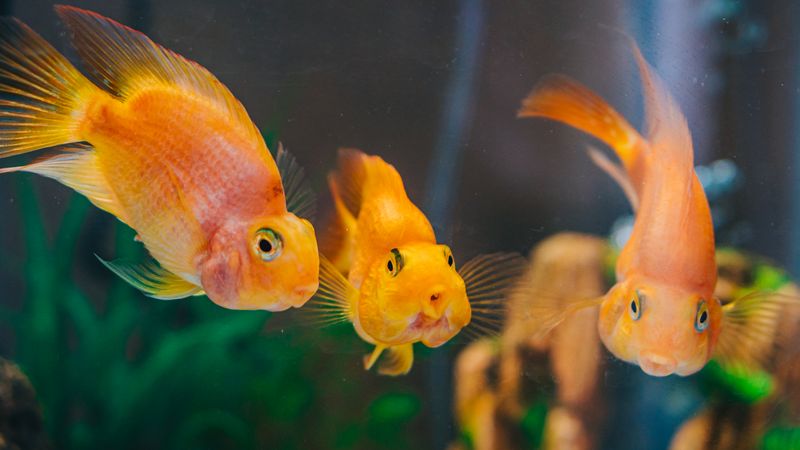
9. Cherry Barb (Puntius titteya)
Cherry Barb
Size: 2 inches · Lifespan: 4-6 years · Temperament: Peaceful schooling · Tank: 20+ gallons · Temperature: 73-81°F
$3-5 each
Shop Barb Supplies →Cherry barbs are the exception to "barbs are nippy" rule. They're peaceful, colorful, and easy to care for. Males turn vibrant red when happy and displaying; females are silver with a red stripe.
They need a school of six or more to feel secure. In smaller groups, they hide. Cherry barbs appreciate planted tanks with open swimming space. They're mid-level swimmers that add movement and color without aggression.
They're slightly larger than some other beginner fish, so a 20-gallon tank is better than 10. They pair well with corydoras, tetras, and rasboras.
10. Mystery Snail (Pomacea bridgesii)
Mystery Snail
Size: 2 inches · Lifespan: 1-2 years · Temperament: Peaceful · Tank: 5+ gallons · Temperature: 68-82°F
$3-6 each
Shop Snail Supplies →Not a fish, but an essential beginner invertebrate. Mystery snails are algae eaters, scavengers, and fascinating to watch. They come in gold, blue, ivory, and purple colors.
They need calcium for shell health — add cuttlebone or wonder shell to your tank. Mystery snails lay eggs above the waterline (pink clusters). Remove eggs if you don't want babies.
They're escape artists — keep your tank covered. Never use copper-based medications with snails (it's lethal). One snail per 5 gallons is a good rule.
How to Build Your First Community Tank
A 20-gallon community tank could include:
- 6 Neon Tetras (mid-level schooling)
- 6 Cherry Barbs (mid-level schooling)
- 4 Corydoras Catfish (bottom dwellers)
- 1 Mystery Snail (cleanup crew)
This gives movement at all tank levels, visual variety, and ecological balance. Add fish slowly — one species per week — to avoid overwhelming your biological filter.
Fish to Avoid as a Beginner
- Goldfish: Produce massive waste, need 20+ gallons each, live 10-20 years
- Oscars: Grow to 12+ inches, aggressive, need 75+ gallons
- Discus: Require perfect water parameters (pH 6.0-7.0, 82-86°F), expensive
- African Cichlids: Aggressive, need hard alkaline water, complex social dynamics
- Saltwater Fish: Complex chemistry, expensive equipment, delicate species
- Common Pleco: Grows to 18+ inches, produces enormous waste
Pet stores often mislabel these as beginner fish. Do your research before buying.
Frequently Asked Questions
What are the best fish for a beginner's first aquarium?
The best beginner fish are hardy, peaceful, and adaptable. Top choices include: betta (5+ gallons), neon tetra (10+ gallons, school of 6+), platy (10+ gallons), corydoras catfish (10+ gallons, school of 3+), and zebra danio (10+ gallons, school of 6+).
How many fish can I put in a 10-gallon tank?
Follow the 'one inch per gallon' rule as a starting point, but consider fish behavior and waste production. A 10-gallon tank could hold: 1 betta + 6 neon tetras, OR 6 platies, OR 8-10 small rasboras. Always research each species' specific needs.
Can I keep a betta with other fish?
Yes, but carefully. Bettas can be territorial. Good tank mates include: neon tetras, ember tetras, harlequin rasboras, corydoras catfish, and snails. Avoid other bettas, guppies (their flowing tails trigger aggression), and fin-nippers. Use a 10+ gallon tank with plenty of hiding spots.
What fish should beginners avoid?
Avoid: goldfish (produce massive waste, need 20+ gallons each), oscars (grow to 12+ inches), discus (require perfect water parameters), African cichlids (aggressive, need specialized water), and saltwater fish (complex chemistry). Stick to hardy freshwater community fish.
How often should I feed my beginner fish?
Feed once or twice daily, only what fish consume in 2-3 minutes. Overfeeding is the #1 beginner mistake — excess food rots, spikes ammonia, and clouds water. Fast fish one day per week to prevent digestive issues.
Get weekly guides from AquariumLab
No spam. Unsubscribe anytime.